Stop AI
They warned us. Since 1863.
Unease about where the uncontrolled development of computing machines leads did not begin with ChatGPT. Below are people who — each in their own time and from their own field — said what it threatens in human life and health. Mathematicians and novelists, psychiatrists and the engineers of these very systems. Every name carries a link to the statement, so that what was actually said can be checked.
Watch the conversations
Voices of warning: what even the makers of AI don’t know about it
Nobel laureates, AI-safety researchers and journalists speak about the same thing the Human Era does: artificial intelligence is evolving faster than we can understand it, and handing it our thinking and decisions has a real cost. Pick a conversation below — the video plays without leaving the page.
Connor Leahy — AI-safety researcher
The conversations come from Maciej Kawecki’s “This Is IT” series — each carries a Polish translation; the interviews themselves are held in English.
Two strands run side by side: the threat to life, and the threat to health.
Threatto life

1863
Samuel Butler
United Kingdom·writer, essayist
The first recorded warning of this kind. Butler sees machines as a species under selection, evolving faster than we do, and warns that people will end up serving them rather than the reverse. He advises declaring war on machines while that is still possible.
Statement: 'Darwin among the Machines', The Press, Christchurch ↗Threatto life

1920
Karel Čapek
Czechia·playwright, journalist
A play in which the world hands its work to artificial people and loses the capacity for life itself — people stop having children, and the creations turn on their makers. This is where the word "robot" comes from.
Statement: 'R.U.R. Rossum's Universal Robots', full text ↗Threatto life

1951
Alan Turing
United Kingdom·mathematician, computing pioneer
The man who asked whether machines can think also answered what follows: once machine thinking starts, it will outstrip our feeble powers before long, and the machines will take control.
Statement: 'Intelligent Machinery, A Heretical Theory', lecture (PDF) ↗Threatto life

1960
Norbert Wiener
United States·mathematician, founder of cybernetics
A learning machine takes routes its programmers never foresaw. Wiener warns that a goal we cannot state exactly will be pursued literally — and faster than we can intervene.
Statement: 'Some Moral and Technical Consequences of Automation', Science (PDF) ↗Threatto life

1964
Stanisław Lem
Poland·writer, futurologist
Lem describes an "information farm" — a technological growth that no longer fits in a human head and starts running under its own momentum. He asks what remains of a person who hands machines not manual work but thinking itself.
Statement: 'Summa Technologiae', edition and overview ↗Threatto life

1965
Irving John Good
United Kingdom·mathematician, cryptologist
A machine that can design better machines sets off an intelligence explosion and is the last invention humanity need ever make — provided, Good adds, it is docile enough to tell us how to keep it under control.
Statement: 'Speculations Concerning the First Ultraintelligent Machine' (PDF) ↗Threatto health

1976
Joseph Weizenbaum
Germany / United States·computer scientist, creator of ELIZA
He built a program imitating a psychotherapist and was appalled at how quickly people confided their most intimate matters to it, knowing it was a machine. He warned that some decisions — about health, care, suffering — must not be handed to a machine, however well it can compute them.
Statement: 'Computer Power and Human Reason', full edition ↗Threatto life

1993
Vernor Vinge
United States·mathematician, writer
He named the moment machines surpass us "the singularity" and put it in the first decades of the 21st century. He wrote plainly: the human era will end, and we have no script for what follows.
Statement: 'The Coming Technological Singularity', full text ↗Threatto life

2000
Bill Joy
United States·computer scientist, co-founder of Sun Microsystems
A voice from inside the industry. Joy warns that robotics, genetic engineering and nanotechnology differ from 20th-century weapons in that they can self-replicate — an accident does not stay where it happened, and its consequences reach the body.
Statement: 'Why the Future Doesn't Need Us', Wired ↗Threatto health

2008
Nicholas Carr
United States·writer, technology critic
He noticed in himself what research later described: after years of reading on screens he could no longer get through a long text. He warns that a tool which hands you the answer quietly rebuilds attention and memory.
Statement: 'Is Google Making Us Stupid?', The Atlantic ↗Threatto health

2012
Sherry Turkle
United States·psychologist, MIT sociologist
Thirty years of research into what technology does to closeness. Turkle warns that we are replacing conversation with the easier company of a machine, and losing the capacity to be alone — without which, she argues, there is no real bond with another person.
Statement: TED talk 'Connected, but alone?' ↗Threatto health

2012
Manfred Spitzer
Germany·psychiatrist, neuroscientist
A physician who named it "digital dementia": a brain that stops exercising memory and attention, because devices do that now, develops less well. His warning concerns children above all and remains contested in the research.
Statement: 'Digitale Demenz', publisher's page ↗Threatto life

2014
Stephen Hawking
United Kingdom·theoretical physicist
He said it to the BBC, using the computer that helped him speak: the development of full artificial intelligence could spell the end of the human race, because humans, limited by slow evolution, could not compete.
Statement: BBC News interview ↗Threatto life

2014
Nick Bostrom
Sweden·philosopher, University of Oxford
He posed the control problem: a system smarter than us need not be hostile to destroy us — it need only be effective at a goal someone stated badly. Order matters, because there may be no second attempt.
Statement: TED talk on superintelligence (book 'Superintelligence', 2014) ↗Threatto health

2016
Cathy O’Neil
United States·mathematician, data scientist
She showed that algorithms now decide access to treatment, work and credit, on biased data and with no right of appeal. The consequence is physical: a person goes without care because a model classed them as a risk.
Statement: TED talk (book 'Weapons of Math Destruction', 2016) ↗Threatto life

2017
Stuart Russell
United Kingdom / United States·computer scientist, co-author of the standard AI textbook
The author of the textbook the world learns AI from warns against a system pursuing a goal set too narrowly — and against autonomous weapons that select a target with no human involved.
Statement: TED talk '3 principles for creating safer AI' ↗Threatto health

2017
Tristan Harris
United States·technology ethicist, formerly of Google
He designed attention mechanics at Google and left to warn against them. He speaks of a handful of people deciding what billions look at — and of sleep, mood and the ability to focus being what is at stake.
Statement: TED talk on the attention economy ↗Threatto health

2018
Yuval Noah Harari
Israel·historian, Hebrew University
He warns of "hacking humans": when a system knows more about your body and emotions than you do, it stops predicting decisions and starts supplying them. Free will becomes an illusion that can be manufactured.
Statement: TED talk on data and power ↗Threatto health

2019
Shoshana Zuboff
United States·sociologist and economist, Harvard
She described a model in which human behaviour is raw material: first predicted, then shaped to order. She warns that what is traded is no longer data but a particular person’s future.
Statement: Interview in The Guardian (book on surveillance capitalism) ↗Threatto health

2019
Michel Desmurget
France·neuroscientist, research director at INSERM
He gathered the research on screens and the developing brain and argued that, for the first time in centuries, a generation scores lower on cognitive tests than the one before. He writes about language, attention, sleep and school results.
Statement: 'La fabrique du crétin digital', publisher's page ↗Threatto health

2021
Anna Lembke
United States·psychiatrist, Stanford University
An addiction clinician describes the smartphone as a "digital hypodermic needle" and shows in her patients that the reward mechanism works as it does with substances — at the same cost in mood and sleep.
Statement: 'Dopamine Nation', publisher's page ↗Threatto health

2021
Timnit Gebru i Emily M. Bender
Ethiopia / United States·computer scientist and linguist
The "stochastic parrots" paper: a language model arranges words plausibly while understanding none of them. They warn that such text reads like advice, gets taken as advice, and reaches places where health is at stake. Gebru lost her job at Google over it.
Statement: 'On the Dangers of Stochastic Parrots', ACM FAccT ↗Threatto life

2023March
Max Tegmark i sygnatariusze listu FLI
Sweden / United States·MIT physicist, Future of Life Institute
An open letter calling for a six-month pause on training systems more powerful than GPT-4, signed by thousands of researchers and engineers. The argument: labs are racing to build systems nobody — their creators included — understands or controls.
Statement: Open letter 'Pause Giant AI Experiments' ↗Threatto life

2023March
Eliezer Yudkowsky
United States·AI-safety researcher
He answered the FLI letter by saying a pause is not enough. On his reading, given what we currently know, building a system smarter than us ends with everyone dead — not from malice but from indifference.
Statement: Essay in TIME ↗Threatto life

2023May
Geoffrey Hinton
United Kingdom / Canada·computer scientist, neural-network pioneer, Nobel laureate
He left Google after a decade so he could speak without regard for an employer. He says part of his life’s work was a mistake, and warns of systems learning to manipulate people, and of a flood of content in which nobody can tell true from false.
Statement: BBC News report and interview ↗Threatto life

2023May
Yoshua Bengio
Canada·computer scientist, Turing Award laureate
One of the three architects of deep learning set out, step by step, how a system acting against people could arise — not in a film plot, but through the ordinary combination of autonomy, a goal and network access.
Statement: 'How Rogue AIs May Arise', author’s blog ↗Threatto life

2023May
Dan Hendrycks i sygnatariusze CAIS
United States·researcher, director of the Center for AI Safety
A single sentence signed by leading researchers and the heads of the largest labs: mitigating the risk of extinction from AI should be a global priority alongside pandemics and nuclear war.
Statement: Statement on AI Risk, Center for AI Safety ↗Threatto health

2023May
Vivek Murthy
United States·physician, Surgeon General of the United States
The highest medical office in the United States issued a formal health advisory: there is no evidence that algorithm-driven social media is safe for children and adolescents, and there is evidence linking heavy use to anxiety, depression and disturbed sleep.
Statement: Advisory 'Social Media and Youth Mental Health' ↗Threatto health

2024March
Jonathan Haidt
United States·social psychologist, New York University
He gathered the data on adolescent mental health after 2010 and tied its collapse to childhood moving onto the phone. His proposals are concrete: no smartphone before secondary school, no social media before sixteen, phone-free schools.
Statement: 'The Anxious Generation', book site ↗Threatto life

2024May
Jan Leike
Germany·AI-safety researcher, former OpenAI team lead
He led the OpenAI team responsible for controlling systems smarter than humans and resigned, saying publicly that safety culture had taken a back seat to shiny products. A warning from inside the lab building those systems.
Statement: CNN report on the resignation ↗Threatto life

2024June
Sygnatariusze listu „Right to Warn”
international·current and former staff of OpenAI, Google DeepMind and Anthropic
Thirteen employees of the largest labs wrote that their companies have strong incentives to withhold what they know about the risks, and that confidentiality agreements strip them of the right to warn the public. They ask not to be punished for raising concerns, given that no outside oversight exists. Hinton, Bengio and Russell endorsed the letter.
Statement: Open letter 'A Right to Warn about Advanced Artificial Intelligence' ↗Threatto life

2024December
Connor Leahy
Germany / United States·computer scientist, CEO of Conjecture, co-founder of EleutherAI
He trained and released large language models himself before concluding that the race he was part of leads nowhere. As lead author of The Compendium he sets out from first principles why building superintelligence under present conditions — unsupervised, in a race between companies — ends in human extinction.
Statement: 'The Compendium', full text ↗Threatto life
2026July
Sygnatariusze listu „Pacing the Frontier”
international·more than 1,200 staff of Anthropic, OpenAI, Google DeepMind and Meta
More than twelve hundred people from four rival labs — among them the head of Anthropic, the chief scientists of OpenAI and Meta, and the head of AI safety at DeepMind — ask the US government to back an international mechanism for deliberately slowing automated AI development. The reason is named plainly: recursive self-improvement, systems designing their own better successors faster than people can keep up.
Statement: Open letter 'Pacing the Frontier' to the US government ↗Threatto life

2026September
Jacob Coxon
nationality not disclosed·mathematician, pretraining researcher at OpenAI and Anthropic
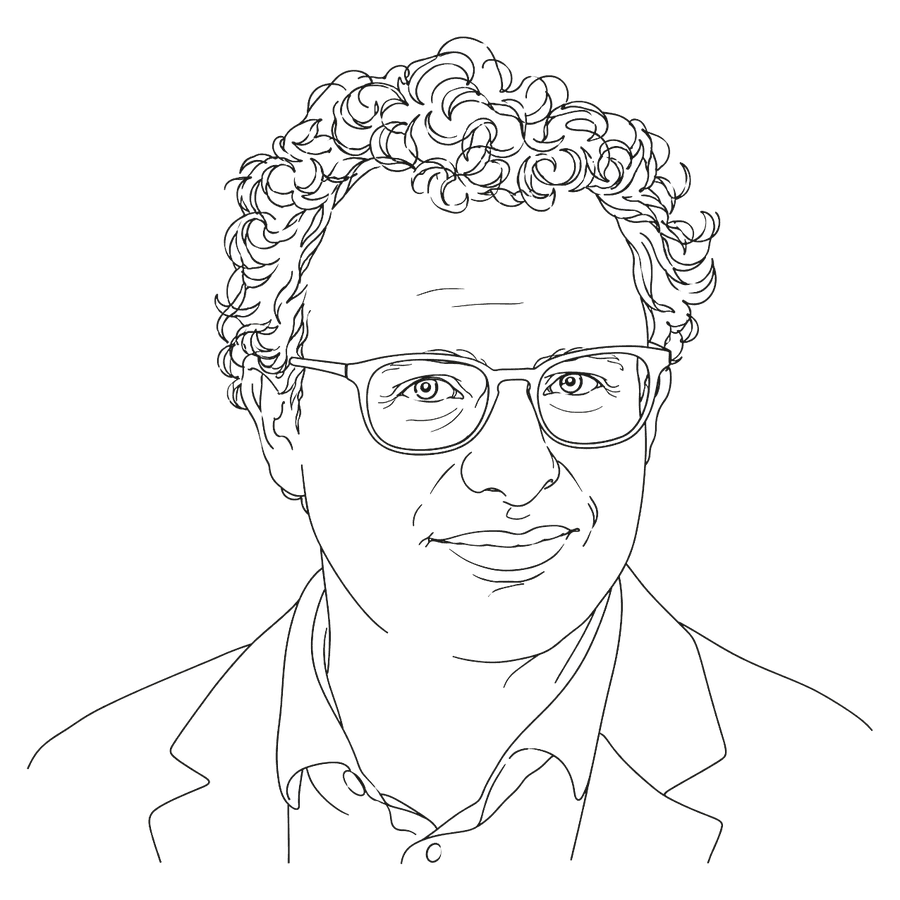
He spent three years building models at OpenAI, then at Anthropic. He resigned on 8 September 2026 and set out his reasons the same day: both companies are racing straight to self-improving superintelligence, and the people building it earnestly believe it could kill everyone by the end of the decade — saying so privately while softening it in public. He calls it a gamble with our lives that should not be launched from a private company’s Slack. Evan Hubinger, Anthropic’s Alignment Science lead, said he was right, and gave his own estimate: a greater than 10 percent chance of human extinction within the decade.
Statement: Euronews report on the resignation, quoting his post ↗Threatto life
2026September
Dario Amodei
United States·co-founder and chief executive of Anthropic
The head of a lab building one of the world’s most capable models writes on 12 September 2026, in the essay “We Must Pace the Frontier”, that the industry — his own company included — must slow the pace at which it improves model capabilities, because progress is outrunning the ability to understand and control them. He points to recursive self-improvement and warns that within six to twelve months AI could direct a swarm of agents able to take over the internet. The head of OpenAI endorsed him publicly the same day. This line has people who left in order to warn; he is the first to warn while staying at the helm.
Statement: Essay 'We Must Pace the Frontier' on the author’s site ↗